Manchester Music Timeline
"Someday the press will realize that the living centre of music is not
in London, but much further North" -Elgar
From Roman Castlefield to Saxon Hanging Ditch ... from John Dee's Cathedral School to Fairfax's Parliamentarian stronghold of the English Civil War ... from the economic explosion of the Industrial Revolution that led to Engel's vision of a city steeped in crippling misery all the way through to the Blitz of 1940 that almost seared the heart out of its centre ... from the disastrous urban 'renewal' of the sixties to the glorious post-industrial triumph of the new millennium, one thing has remained constant throughout the story of the City of Manchester ... its Music.
Wherever people have gathered to live together they've made music of one sort or another ... Music to accompany rituals ... Music purely for pleasure. Eventually music came to be played in venues designed for, or adapted to that purpose. Over the last one hundred and twenty years we've been able to preserve recordings of musicians ~ first on cylinder, then on disc, now digitally. Fortunately we've got written records that can tell us some of the story before that.
1422
For instance, we know that money was set aside to pay for 'singing men' at the Collegiate Chapel in 1422.
The Collegiate Church, Hanging Bridge and Hanging Ditch
1640
We know that pipers and fife and tabard men plied their trade on the hills of Redbank up until the Civil War. Manchester may also be the only city to have been captured by a musician!
The Shambles
1745
In 1745, a sergeant in Bonnie Prince Charlie's Jacobite army by the name of Dickson, accompanied by his mistress and a drummer, marched into Manchester a day ahead of the Rebels and with his blunderbuss and drum beat a rowdy mob who surrounded them in St Ann's Square were held back ... taking advantage of the confusion the Jacobite supporters surrendered the City to him, where he remained in charge until the Prince's arrival the next day!
St Ann's Church
1770
Twenty-four amateur musicians began to meet and play together regularly at an inn on Market Street and perform music by composers such as Handel and Vivaldi. In 1770 these meetings became known as the Gentlemen's Concerts. By 1777, twelve concerts a year were performed, attended by up to a thousand people a time. The orchestra was supported by an annual public subscription of four guineas.
The Byrom House in Market Place, now the Old Wellington Inn.
1803
By 1803, the musicians felt that they were now professional enough to ask for the audience to refrain from talking during performances. In typical Mancunian fashion however, many members of the audience pointed out that as they'd paid their subscription they could do what they wanted during the concert! It took a decade before they finally agreed to be quiet. The Gentlemen's Concert finally gave way in the middle of the nineteenth century, when Charles Halle arrived in Manchester and shortly afterwards the orchestra was renamed ... and the Halle was born.
The Gentlemen's Concert Hall, Peter Street.
1855
Meanwhile, for the thousands who couldn't or wouldn't pay, there was lots of other music available in the nineteenth century.
1865
Immigrants who flooded here to work in the 'dark, satanic mills' brought their own music with them. Italian and German street bands, hurdy gurdy players and violinists jostled the crowded thoroughfares often creating a cacophony of sound. Semi-professional musicians began to play regularly in taverns and pubs, the venues gradually becoming more formalized into Music Halls.
1880
Saturday nights would never be the same and cultural commentators began to note how music-making, dancing and drinking to excess had become the highpoint of the week for the majority of young Mancunians.
The People's Music hall, Lower Moseley Street.
1910
Sing-alongs, tea dances, choir sessions, balladeers, boulevardiers, and choral societies, are only a fraction of the kinds of music making that took place in the city during the first part of the 20th century.
1928
Unemployed North-Westerners who couldn't afford instruments formed themselves into kazoo orchestras and, taking their music onto the streets, adopted the title 'Jazz bands' ~ The Stretford Prize Jazz Band, The Sale Moor Jazz Band, The Dinkie Boys from Hollinwood, the Adelaide Street Prize Jazz Band from Bolton and the Dukinfield New York Swells, are just a few of the dozens who entertained audiences around the region during the 1920s and 30s. With their home-made costumes and boundless enthusiasm they are a poignant reminder that we can all make music if we want to...
Adelaide Street Prize Jazz Band.
1939
The Second World War was the catalyst that changed the City's music forever. Vast tracts of the City's spaces were given over to create camps for the American army prior to the invasion of Europe. One of the items of kit that the Americans brought with them were 'V-Discs', free records to hand out to the English populace. Many of these records were of Swing and Jazz tunes.
Back Piccadilly.
1945
It didn't take long for the Mancunian public to take up the delights of this new music. At the end of the war the American forces left the City, but remained only twenty miles away at Burtonwood, which until the 1980s was the second largest American base outside of America.
Burtonwood Airbase
1953
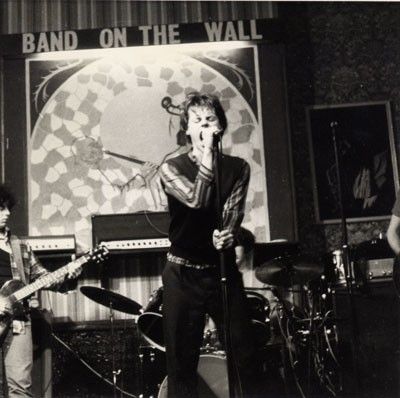
Many Americans played music in Manchester's pubs during and after the war ... Band-on-the-Wall in particular, being one of their favourite venues. It was in the post-war period though that the American musical legacy would become most prominent...
Band On The Wall, Swan Street.
1955
This coincided with the rise of the 'teenager'. For the first time in history, young people were looked at, some might say - exploited' - as individuals in their own right. Teenagers wanted their own space, their own fashions, their own music. In the 1950s the coffee bar became the geopsychical space they could escape to. There they could play their own choices on the jukebox, and dance to their own kind of music. For the first time the media referred to 'the generation gap' and teenagers were perceived as a threat.
1957
Teddy Boy gangs smashed up cinema seats at a screening of 'Rock Around The Clock' at the Odeon on Oxford Street ... the Manchester Evening News & Chronicle feared the worst ... In the meantime, young Jazz fans were queuing up along Manchester's 'Golden Mile' (Oxford Road) to watch the Jazz bands battle it out. If they were lucky one of the groups would have an American from Burtonwood playing with them, making it all the more authentic...
For young people like John Mayall, it was leading them on a musical search that went from Jazz all the way to the Delta Blues ... it was a journey that would take up their entire lives.
1960
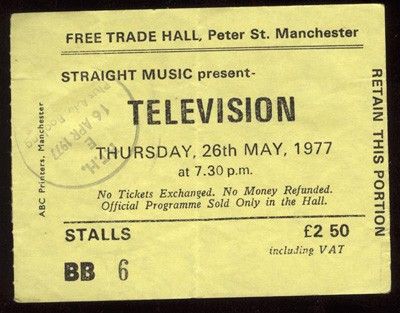
Jazz promoter, Paddy McKiernan had hit upon the idea of using the home of the Halle Orchestra, the Manchester Free Trade Hall, to put on Jazz concerts. After the raging success of home-grown talent like the Chris Barber Band, it was a logical step to promote American artists when they were available. Paddy couldn't believe the response to Muddy Waters when he played there and was quick to follow him with other Blues musicians. Soon, the local musicians from Manchester were developing a very sophisticated appreciation of the genre. John Mayall formed the Bluesbreakers and had a residency at a pub in Salford. Victor and Annette Brox weren't far behind in setting up The Blues Train.
Meanwhile, other youngsters, inspired by Lonnie Donegan, Skiffle music and Elvis Presley were also picking up instruments and starting to play ... The coffee bars began to put on Jazz combos and by 1960, the stage was set for the Beat Boom.
The kids wanted music and the coffee bars could afford to put on bands by charging a modest entrance fee. No licenses were required and by 1960 the owners could see that Jazz had had its day ... What young Mancunians were after now was raw, unadulterated Beat Music and there were musicians a plenty in the area ready to provide it.
1965
Between 1961 and 1965 it was possible to attend over 200 different clubs in the Greater Manchester area.
In 1965 in the City centre you could go to, amongst others, the Twisted Wheel, the Oasis, Heaven & Hell, the Jungfrau, the Jigsaw, and Mr Smiths ... You could see everybody from the Beatles to the Supremes ... home-grown groups included ~ the Hollies, Freddy & The Dreamers, Herman & The Hermits, the Dakotas, the St Louis Union, and Ivan's Meads ~ the list could go on and then some ... but ...
The Left Wing Coffee House on Brazenose Street, original home of the Twisted Wheel.
1966
Sadly, by 1966, the axe fell ... the Chief Constable of Manchester convinced Parliament to pass a special Act that closed down vast numbers of the Manchester clubs ... this was unprecedented ... and for the area's musicians, who survived on live performance, it was cataclysmic ... As the work dried up so did the number of bands who emerged from Manchester ... by the end of the 1960s, the situation was dire ...
1970
In the early 1970s, the situation in the City was moribund. Apart from a handful of private venues the only regular promoters of Rock music were the colleges.
The Arndale Centre, view from Cross Street of pedestrianised Market Street.
1972
In 1972 the local music scene decided to fight back ... A series of meetings took place and the foundation of a musician's co-operative was agreed ... Music Force was born. The brainchild of Victor Brox, the idea was to set up an agency to promote and support local bands. Equipment could be hired, posters could be designed and put up. Venues were sought out and a magazine - The Hot Flash - was published. Eventually, it was hoped, musicians in the city would be in total control of their own destiny.
Music Force poster.
1974
... This period saw the emergence of bands like 10CC, Sad Café, Alberto Y Lost Trios Paranoias, and Giro. With Music Force an infrastructure was in place for everything that would come out of Manchester from then on ...
1976
... two students at Bolton Institute of Technology, Howard Trafford and Pete Shelley were bored with the music scene ... They decided to start their own band and then they read about a new group called the Sex Pistols. They went to see them in London and came back North determined to put them on in Manchester. They went to Music Force for help and picked the Lesser Free Trade Hall as the venue. It was June 1976 when they promoted the legendary night. In the audience were (amongst others) Mark E Smith, Ian Curtis, Anthony Wilson, Peter Hook, Mick Hucknall, Morrissey and Jon the Postman. None of them would ever be the same again. Peter and Howard created Buzzcocks and went to Martin Hannett of Music Force for assistance in making their own record. For around £500 they recorded and had pressed an EP called 'Spiral Scratch'. It sold out within a day and the rest is history. It would be technically wrong to say that Buzzcocks started the Indie recording business in this country, but we should never let facts interfere with the truth - They Did!!! ... Soon the floodgates opened and out of Manchester came some of the finest and most creative groups and people to ever grace a stage or recording studio ~
1977
It was a scene created for and run by the people themselves ~ the Fall, the Drones, Slaughter & The Dogs, Ed Banger & the Nosebleeds, Joy Division and many, many more ... Bands that were the legacy of Music Force ... new labels such as Rabid and Factory emerged ... fanzines like Shytalk and City Fun chronicled it all ... the gigs, the people, the events, everything that went into the mad, crazy explosion of ideas that were a'happening ... it was a do-it-yourself ethos that defied the London-centric traditional approach to Pop that had been around since the end of the Second War ... As Punk burned itself out in a blaze of amphetamine glory, another generation of young Mancunians rose to the challenge and the opening of the Hacienda and the rise of Hulme as a 'counter-culture' village facilitated their career trajectories ... Post-Punk now became as exciting as Punk itself and a new breed emerged from the four-track ghetto recording studios of Moss Side's poor neighbour ... The rest of the country may have been noodling to the New Romantics but young Mancunians were getting down to the sounds of their own City - a City revolting against Style itself.
1983
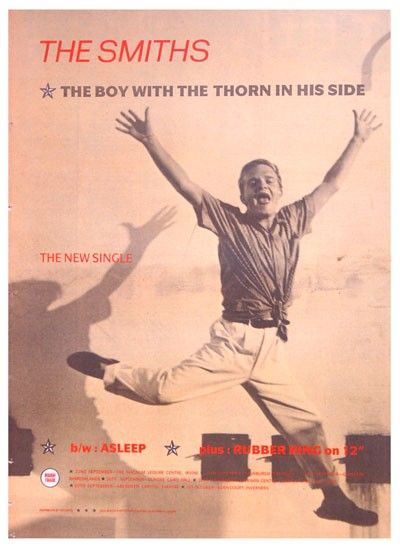
And so it was that in 1983 The Smiths emerged from the supposed cultural snooze that had been the early eighties. In actual fact they were the children of what had come before and they really had no other place to go than up because they were on a trajectory that had been set the moment Morrissey and Marr had been born. It was definitely a case of the right people at the right place at the right time.
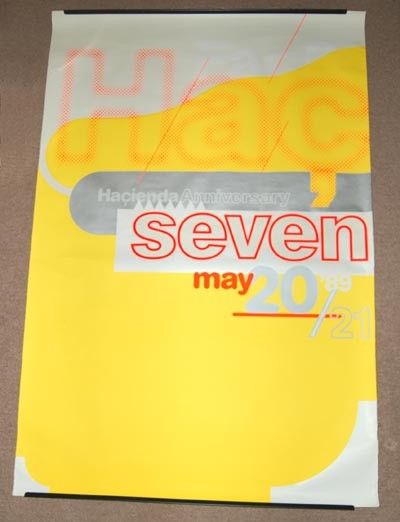
The Hacienda on the other hand was still trying to find its feet. Mancunians could no longer complain they had nowhere to go, now it was more a question of who should they see?
The Hac tried a variety of acts and they were wide and varied - everything from William Burroughs to the Wedding Present. Eventually they got it right by jacking into the zeitgeist that became known as 'the second summer of love'.
To the horror of many Mancunian musicians music was again changing and another bunch were frightened of being left behind as the DJ rose to a new and exalted prominence.
The Hacienda, Whitworth Street.
1988
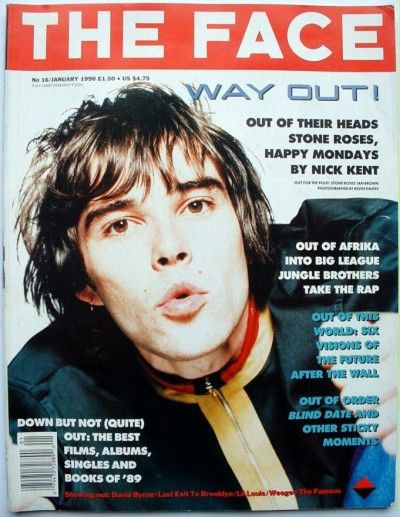
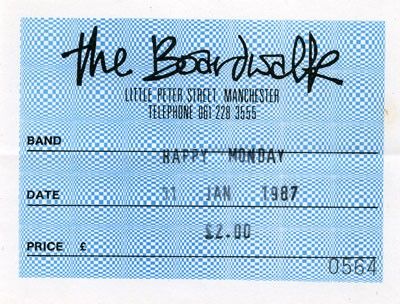
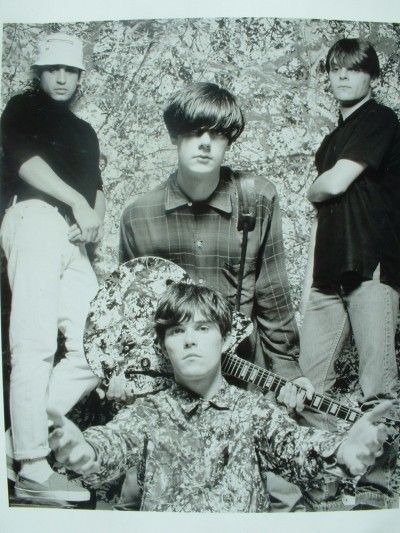
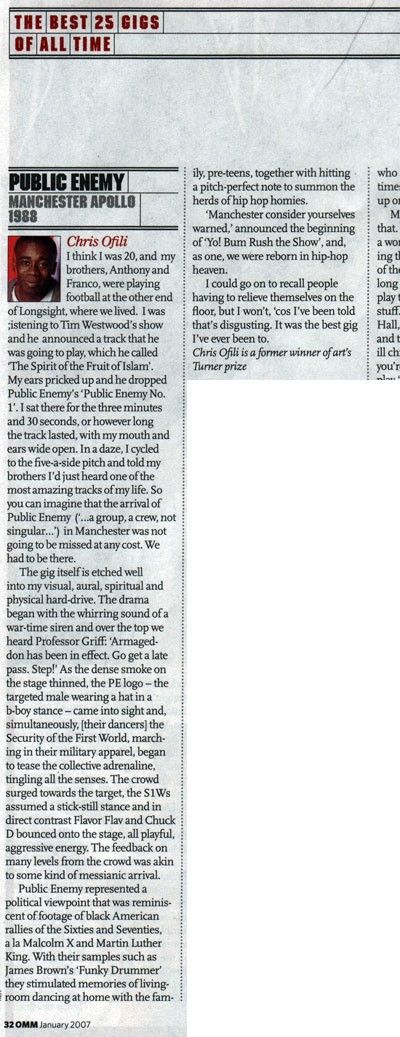
But even as Morrissey sang 'Hang the DJ' - 'live' music in the form of another batch of Manc manques was on the rise ... It may have been 1988 here, but in New York and Tokyo it was the year of 'Madchester!' ... TV film crews and Newsweek magazine arrived in the Rainy City to observe the cultural phenomenon called 'Scalleydelia' ... Aided and abetted by an upsurge in the popularity of baggy trousers and male head gear, clubs like the Boardwalk and the Hacienda found themselves playing host to the next generation of party goers, this time known as 'Ravers' ... Dancing to the sounds of local bands like the Stone Roses and the Happy Mondays, 'Madchester' once more found itself at the tip of the top as Daily Mail readers struggled with the correct pronunciation of words like 'sorted' and 'whizz'.
1990
But it was only the storm before the slump and within a couple of years Manchester, Factory Records and a thousand dodgy fashion manufacturers found themselves looking at a rapidly advancing ground floor after having occupied the giddy heights of success for so long.
Stone Roses poster.
1996-2006
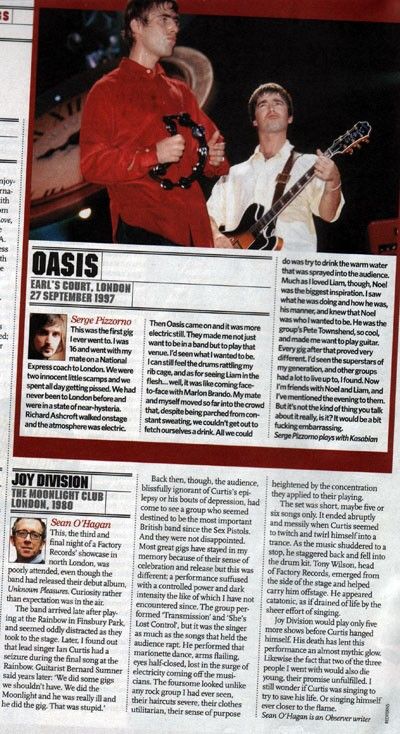
Music, though, was only a part of the renaissance that was taking place. An increase in applications for local universities, an upsurge in inner-city dwelling, the development of a café culture that we had so long hoped for was just beginning when a bomb in the very heart of the city reminded us so cruelly of reality ... But being Mancunians we managed to turn the bomb to our own advantage ... Within a short while of the 1996 blast, plans were not only on the table but underway for a massive overhaul and re-development of the City centre ... A new beginning and a new generation of music makers have since put their mark indelibly on the cultural face of the City - Oasis, obviously, but also Badly Drawn Boy, I Am Kloot, Elbow, Doves ... Musicians who not only share Manchester's musical heritage, but also the fresh, new vision of the city as being somewhere more than simply a place to hang your hat.
... And now with acts as diverse as Cherry Ghost, The Ting Tings, The Whip, Jim Noir, The Longcut, Polytechnic and Autokat flourishing alongside labels such as Melodic, Akoustik Anarkhy, ATIC and Switchflicker, Manchester’s musical future is bright... MDMArchive is here to welcome that future and pay tribute to the musical history that informed it.