It was 1988. I was working as a freelance writer for NME
while living in Liverpool. I had a weekly House and Hip-Hop
review column at NME. This was still relatively niche content
at the time- though Public Enemy and Beastie Boys had
already been cover stars. As a result, I began to get records
sent to me from America- from labels like Tommy Boy,
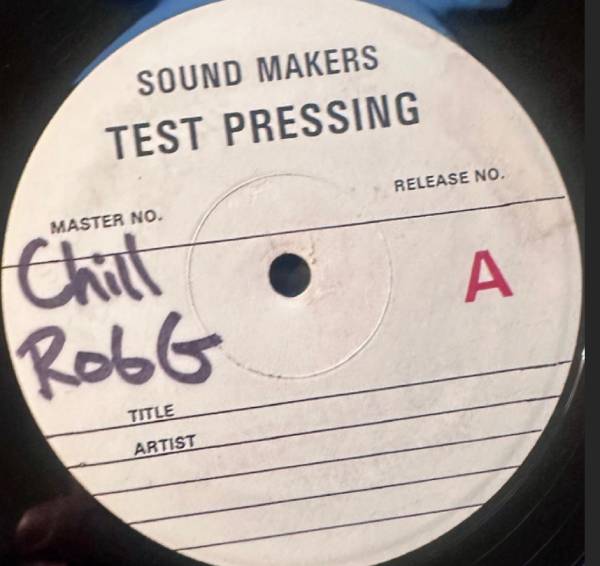
Sleeping Bag and Wild Pitch. They’d send white labels-
usually twin copies- as they would to US DJs cutting and
scratching with them. Neither of which I was able to do. And
certainly not on the single 50-pound turntable I’d bought
from Richer Sounds on the corner of Wellington Road in
Stockport. I later found out these labels would rarely have
mailed outside of America, but that a review in NME was
regarded as useful when seeking lucrative licence deals with
British labels.
These white labels were piling up in at a council house in
Kirkby- my mum’s home from which I, rather unfashionably
(but retrospectively amusingly) operated at that point. When
she was out shopping (she never liked the noise) my former
teenage bedroom would pulsate to Main Source, Gang Starr,
Mantronix, Nocera, Joyce Sims and Stetsasonic. These
records didn’t always get released in Britain, and if they did
these promo copies would reach me weeks before even a US
release.
I recall chatting to Stu in Spin Inn records on Cross Street. I
used to visit once a week from Liverpool. I was principally
interested in topping up my DC Go-Go collection and Kenny
and Russ were my pushers. I wouldn’t describe him as
friendly. But he certainly wasn’t unfriendly. A star visitor to
the shop, he was visibly fussed over. Fellow Manc music
shoppers would crane to catch sight of his purchases,
stopping just short of asking him for an autograph. He was a
big deal locally- especially among the young and principally
black (at least at that stage) Hip-Hop community. A perhaps
unlikely hero. There was a vaguely awkward inflexibility
about him. The bog brush hair cut just so, and never seen an
inch outgrown, the MA-1 flying jacket pristine and possibly
replaced on a monthly basis. The counter throng would part
for him as he made his way down the stairs to the basement
space. Weird handshakes with the esteemed Kenny and Russ
would give way to behind the counter one-offs briskly piled
up for him. It looked like he’d take almost anything they’d
‘put back’ for him, knowing well what he needed.
Perhaps he was irked that some Scouse interloper working
for the ‘rockist’ institution that was NME, already had some
of these records, and was in fact getting more week-in-week
out way before some even made it to Spin Inn. I recall him
alighting on my revelation of this preferred relationship with
US labels during some brief counter-top conversation there. I
think Kenny introduced us. My postal arrivals seemed of
particular interest to him. We exchanged numbers. I already
knew this would be no friendship. At least not as I (in my own
stilted way) understood it. But our shared enthusiasm for the
music acted as an unexpected temporary glue. He invited me
to sit in on his Sunday night show- not exactly a guest but an
observer he might occasionally mention was in the room.
What was important for him was that I’d bring my NY Hip-
Hop exclusives with me, and he’d get to play them on the
show- helping in some small way to shore up an already well-
deserved reputation as the undisputed local King of The
Beats.
I did this maybe 8-10 times. For me it was fun to drive up a
deserted East Lancashire Road on dark Sunday nights, the
souped-up system in my battered Volvo 340 (worth more
than the car itself!) pulsating to ACR or Big Tony and the TF
Crew. I loved the Thunderbirds-styled Piccadilly Gardens
overlooking rooftop block the station was part of. Just as I
remembered it from scenes in the wonderful Manchester set
comedy film, The Lovers, which I’d loved. I put my foot down,
screechily negotiating the Sweeney-styled car park ramp run
to the roof, and entry to a deserted Sunday night station.
Buzzed in, I’d hand over the 12-inch bounty which had made
its way from Times Square to Kirkby. He’d track through
them speedily; almost excitedly, and weave them seamlessly
into what seemed an already meticulously pre-planned show.
He was precise and seemed to be working from detailed
hand-written notes. No improvising. He manipulated the
knobs switches, jingles and faders with absolute accuracy
too. I sensed inane off-mic banter would not be welcome-
though we’d enthuse excitedly about the music making its
way across the northern airwaves for the first time.
Technically, he was an impressive broadcaster. Having seen
quite a few others since, I’d say he was the best. He never
wasted a word on the mic and never seemed to falter either.
There was absolute clarity in his diction. No fluffs, no ‘umms’
or ‘errs….’ He would have made a great breakfast
broadcaster- where that ability would have been prized.
Specialist shows like this, certainly then, didn’t demand such
professionalism. The pirates and tower block renegades
didn’t care- it was all about the music. Faders flying up or
down half-way through the stumbling, shambolic ‘keep it
locked’ DJ cliches. Stu loved the music passionately- just as
much- but it seemed important to him to be pin-precise. He
took old fashioned pride, it seemed, in his job. He’d have had
no truck either with the whacky frivolity of daytime radio. I
recall him bristling at seeing those personality photo cards
local stations produce knocking about the building. He had
his own- you’d guess foisted on him. As if they compromised
his authenticity- his hard won ‘street’ status. I don’t recall
seeing anybody else in the studio. It was a solitary endeavour
for him- a serious thing. No crews, no banter, no in-jokes, no
background chatter. Stu- the mic- the music- with the latter
unquestionably most important. His Soul, House and Hip-Hop
chart countdowns were gospel text for listeners. I knew quite
a few who listened in, enduring questionable reception on
occasion, in Liverpool too. These self-created ‘charts’ were
shopping lists by Monday morning for the cognoscenti, the
acolytes, the followers and late stragglers. He could shift 20
to 30 copies of a big new tune in Spin Inn by Tuesday. It
wasn’t just Hip-Hop either. His passion for early House and
Techno was equal. We’d enthuse over Andrew Komis and
Bigshot, Sha-lor and Lil Louis. The raw early sound of house
he instinctively knew was a worthy parallel for that golden
era Hip-Hop.
It was a privilege to watch him work. He undoubtedly shaped
my taste. We were never friends as is clear, and never
socialised. That was never on the cards- though I would have
welcomed it. As I’ve noted he wasn’t exactly friendly, but I
never got the impression he disliked me. There was never
any sense of that Scouse/Manc rivalry either. How could
there be? New Brighton’s own Greg Wilson had already
made himself a hero on the Manchester scene with Legends.
Plus an easily detectable fierce intelligence would have
discounted such crass cliches.
I wouldn’t ever know enough about him to reasonably
suggest he might have been, ‘on the spectrum’ as it were,
but my experience is that he was socially uneasy and
uncomfortable with non-musical, personal small talk. He was
focussed with laser precision on the music. He was
unquestionably an aesthete in that sense. I would have loved
to have known more about him. He certainly intrigued me.
Maybe one day, and he’s certainly culturally important
enough for this, someone will write a decent biography.
Similar specialist London DJs from the same time have been
lionised and over-egged as a result of undeniable bias and an
over-estimation of the capital and its musical and cultural
primacy. Maybe that’s somehow where we intersected and
mutually, silently appreciated each other. Two northern
nerds momentarily beating the London ‘scene’- if only for a
second or two. It was pleasing for me to know the records
made it beyond my Kirkby bedroom, and were broadcast to
Lower Broughton, Gorton and Prestwich- to other back
bedrooms where the seeds of a significant scene were taking
root.
It was around this same time I met my now good friend
Johnny Jay for the first time. I was writing a piece on
Manchester Hip-Hop for ID magazine. Irrepressibly jolly
Johnny- another Manchester hero whose tale is hardly ever
told- was my fixer.
Who can I speak to, I asked him?
Meet me in Burger King by Piccadilly Gardens on Sunday
night, he said.
But…
Just do it!
So, I did, firing up the 340 for another East Lancs Road trip.
He had around 20 teens queuing in the basement- waiting to
be interviewed. Prince Kool, the impossibly talented MC Buzz
B, Peps and Poochie, Kiss AMC. All Stu listeners. All
empowered to try as a result of what they heard. Busy
building a scene that seemed valid and vital because of his
impossibly important weekly broadcasts. Exciting times.
Innocent too. There are too many people who’ll tell you the
music BUSINESS is all treachery. True. But there’s purity too.
Initially at least. And that’s vital- soul food. At least as good
as Sam Sam’s chicken and dumpling. Which I’d get for the
journey home after Stu bid me a terse (but not unfriendly)
goodbye at a twilit Piccadilly reception.
I look back and I’m glad I saw this very significant broadcaster
at his height. He must have fought to keep that show
running- though I’d wager the listening figures were
impressive indeed. Still, there must have been important
people at the station who somewhat blindly believed in him
and his passion. Even if they didn’t exactly understand him,
perhaps.
The promos eventually petered out, and my taste in music
became broader, less purist. It was clear Stu stayed focussed-
eventually becoming Yoda-like in the dedicated intensity of
his wisdom. A true hero for a generation of Manchester kids
both black and white. From Moston to ‘the’ Moss, Stu was
the boss. Of course, we were all footnotes in a pre-existing
music story which emerged from Hulme and Moss Side, from
a black community whose foundational stories are still to be
definitively documented.
Hip-Hop was still part of my palate. But now alongside things
Stu would have bristled at. I’d pay very good money to travel
back and insist he listened to My Bloody Valentine. I’m
certain he’d have come out in hives. A good while later,
maybe a couple of years, I bumped into him in Manchester
city centre. Same rusted bog brush hair, same MA-1 uniform.
We exchanged a few words and, curiously, he asked for my
address. Maybe he was going to send me a legal disclaimer-
so I swore never to mention providing some of the records
for those now rightly legendary shows. I never gave it
another thought. Perhaps about ten years later, a spool of
CDR-s turned up at my mum’s house in Kirkby (I’d long since
moved to Manchester). About 20 shows from the period.
Along with a brief note. ‘Thought you might Enjoy! Stu’.
Which somehow suggests there was someone else in there.
Someone perhaps his real friends knew. A generous thing to
do. And of course, as my own real friends will tell you, I could
just as easily be perceived as being just as stiff, as stilted, as
socially inept. My guess now is that he was an introvert
pushed out into the world by the music, and an abiding
desire to share it.
Maybe he later recounted somewhere meeting a weirdo
from Liverpool who was unaccountably getting records which
could have more usefully been sent to him.
It’s great his important contributions are being archived,
annotated and documented. They’re not just noise, but true
social and cultural history created by a uniquely driven
curator- who almost single-handedly at certain points- laid
the foundations for a much bigger and more lucrative
Manchester nightlife scene. One which still resonates around
the world.
 Donate
 Upload